2023年7月18日星期二

How Effective Are Radar Speed Signs?

 Radar speed signs, also known as driver feedback signs or speed display boards, have become increasingly common on roadways worldwide. These signs utilize radar technology to detect and display the speed of approaching vehicles, aiming to raise driver awareness and promote safer driving behavior. In this article, we will explore the effectiveness of radar speed signs in enhancing road safety, addressing their benefits and highlighting their role in promoting speed awareness.

Real-Time Speed Display: Radar speed signs employ radar technology to accurately detect the speed of approaching vehicles. The detected speed is then displayed in real-time on the sign, providing drivers with immediate feedback about their speed. This visual representation of their speed serves as a reminder and encourages drivers to reflect on their driving behavior.

Speed Awareness and Self-Regulation: The primary objective of radar speed signs is to increase speed awareness among drivers. By providing real-time feedback on their current speed, these signs prompt drivers to evaluate their speed relative to the posted speed limit. This awareness often leads to self-regulation, as drivers adjust their speed to comply with the limit, resulting in safer driving practices.

Reduced Speeding Incidents: Radar speed signs have shown to be effective in reducing speeding incidents on roadways. The instant display of vehicle speed alerts drivers to their excessive speed, prompting them to slow down. Studies have demonstrated that radar speed signs can lead to significant speed reductions in the vicinity of the signs, contributing to safer road environments and reduced collision risks.


Improved Driver Compliance: Radar speed signs encourage better compliance with speed limits. By providing real-time feedback on speed, these signs help reinforce the importance of adhering to posted speed limits. Drivers are more likely to comply with speed limits when they receive immediate visual feedback on their speed, fostering a culture of responsible and law-abiding driving behavior.

Enhanced Awareness in High-Risk Areas: Radar speed signs are particularly effective in high-risk areas, such as school zones, residential neighborhoods, and construction zones. These signs alert drivers to reduce their speed in areas where pedestrians, cyclists, or road workers are present. The real-time speed display acts as a reminder of the need for heightened caution and contributes to a safer environment for vulnerable road users.

Data Collection and Analysis: Many radar speed signs are equipped with data logging capabilities, allowing transportation authorities to collect valuable information on traffic patterns and driver behavior. This data helps identify areas with recurring speeding issues, aiding in targeted enforcement measures and infrastructure improvements to address road safety concerns effectively.

Public Awareness and Perception: Radar speed signs serve as a visible reminder of speed enforcement and road safety initiatives. Their presence raises public awareness of the importance of speed regulation and reinforces the commitment to creating safer roadways. The public perceives radar speed signs as proactive measures to address speeding issues, fostering a positive attitude toward road safety initiatives.

Considerations for Placement and Integration: To maximize the effectiveness of radar speed signs, proper placement and integration with other traffic calming measures are essential. Placing signs in strategic locations, such as areas with high incident rates or near vulnerable road users, ensures maximum impact. Integration with other traffic calming measures, such as speed humps or increased police presence, can further reinforce speed regulation efforts.

Conclusion: Radar speed signs have proven to be effective tools in enhancing road safety through speed awareness. By providing real-time speed feedback to drivers, these signs raise awareness, promote self-regulation, and encourage better compliance with speed limits. The presence of radar speed signs contributes to reduced speeding incidents, improved driver behavior, and a safer road environment. Proper placement and integration of these signs, along with data collection and analysis, further enhance their effectiveness in addressing specific road safety concerns. As radar speed signs continue to be deployed on roadways worldwide, they play a crucial role in fostering a culture of responsible driving and reinforcing the importance of speed regulation for the benefit of all road users.


2023年6月13日星期二

Lane Signs: Guiding the Way for Safer Roads

 Introduction

Lane signs play a vital role in ensuring the smooth flow of traffic and enhancing road safety. These signs serve as essential communication tools, guiding drivers by indicating specific lanes and providing important information about the road ahead. From highway interchanges to urban streets, lane signs are strategically placed to minimize confusion and promote efficient traffic movement. This article explores the significance of lane signs and how they contribute to safer roads.

Enhancing Road Safety

One of the primary objectives of lane signs is to improve road safety. By clearly indicating which lane drivers should be in, these signs help prevent lane-changing conflicts and reduce the likelihood of accidents. Lane signs provide advance warnings for upcoming lane merges, exits, and intersections, giving drivers ample time to adjust their position on the road. This proactive approach reduces the chances of sudden maneuvers and improves overall traffic flow, ultimately minimizing the risk of collisions.

Minimizing Driver Confusion

Navigating through complex road networks can be challenging, especially in unfamiliar areas. Lane signs play a crucial role in reducing driver confusion by providing clear and concise directions. These signs use symbols, arrows, and text to indicate specific lanes for various purposes, such as turning, merging, or exiting. By providing this information well in advance, lane signs allow drivers to make informed decisions and choose the correct lane without last-minute maneuvers, reducing the likelihood of abrupt lane changes or wrong turns.


Managing Traffic Flow

Efficient traffic flow is essential for minimizing congestion and optimizing road capacity. Lane signs help manage traffic flow by designating specific lanes for different purposes. For instance, dedicated turning lanes allow vehicles to make turns without impeding through traffic, reducing bottlenecks at intersections. Similarly, lane signs on highways guide drivers during lane merges, ensuring a smooth transition without causing unnecessary delays or traffic backups. By providing clear instructions, these signs help maintain a steady flow of vehicles, preventing unnecessary congestion and improving overall traffic management.

Supporting Pedestrian Safety

Lane signs are not only important for drivers but also play a crucial role in ensuring pedestrian safety. In urban areas, crosswalks and pedestrian crossings are marked with lane signs to indicate the lanes exclusively designated for pedestrians. This helps alert drivers to the presence of pedestrians and encourages them to yield the right-of-way. By clearly demarcating lanes for both vehicles and pedestrians, lane signs contribute to a safer environment for all road users.

Adapting to Changing Conditions

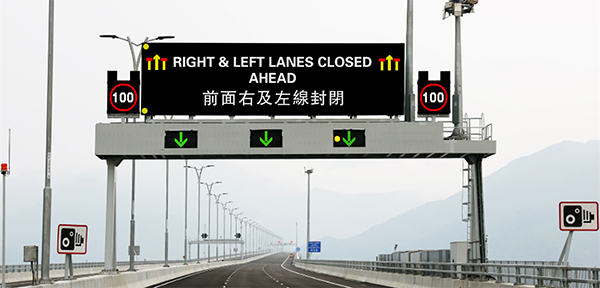
Lane signs also play a critical role in providing information about changing road conditions. Variable message signs, often seen on highways, display real-time updates about lane closures, construction zones, or accidents ahead. These signs help drivers make informed decisions by providing timely information and alternate routes. By keeping drivers aware of changing circumstances, lane signs contribute to safer driving and reduce the likelihood of unexpected incidents.

Conclusion

Lane signs are indispensable elements of road infrastructure that significantly contribute to safer roads. By providing clear directions, reducing driver confusion, managing traffic flow, and supporting pedestrian safety, these signs help minimize accidents and improve overall traffic efficiency. As technology continues to advance, the potential for innovative lane sign systems, such as smart signs equipped with real-time data, holds promise for even greater road safety benefits. With ongoing improvements and the integration of intelligent transportation systems, lane signs will continue to play a vital role in guiding drivers and ensuring safer journeys for all.


2023年4月22日星期六

Sports Display iMPOSA Ribbon

 Model: RIB-6.6 / RIB-8 / RIB-10 / RIB-16S

Sports Display Features:
-Easy top service, front / back service are available
-High contrast ratio with special Anti-UV louver
-High refresh rate & Super large viewing angle
-Fast installation & Invisible wiring
-Ultra thin and light


-Reliable performance with signal hot backup
-Soft rubber louver is available for more protection
Certification: 
CE, EMC, ETL, FCC, RoHS
Application:
Sports & stadium

Inquire our Sports Display


2023年4月6日星期四

Walk-in VMS

 ModelVMS16L-RGB / VMS20L-RGB / VMS25L-RGB / VMS31.25L-RGB

Walk-in Variable Message Sign (VMS) is an electronic sign that is used to display real-time information and messages. This kind of VMS is typically large and mounted on a stand or structure, which makes the sign clearly visible from a distance. Walk-in VMS is widely used in displaying information such as traffic updates, road conditions, weather alerts, and emergency messages.


Walk-in VMS Features:
-Convenient access for maintenance personnel
-Open workspace and organized components for saving maintenance time
-Tough aluminum mask for superior contrast rate and minimal glare
-Positive-pressure, forced-air ventilation system for installation longevity
Certification:
EN12966, ETL, CETL, NEMA TS-4, NTCIP1203
Fixed Walk-in VMS Applications:
To provide safe maintenance and reliable operation, ChainZONE's walk-in VMS is designed with economic cabinet, intelligent features and extraordinary strength.
The excellent LED optical system is compliant with EN12966 Standards and provides a highest optical performance. Full matrix configuration, amber and full-color LEDs, and pixel pitch between 20 and 31 mm are optional.

More information

2023年3月7日星期二

EN12966 M Series VMS

 ModelVMS-10M-RGB / VMS12M-RGB / VMS16M-RGB / VMS20M-RGB / VMS25M-RGB / VMS31.25M-RGB

Variable Message Sign is designed to be highly visible and readable, even in low-light conditions and heavy traffic conditions. ChainZONE uses large and bright LED displays with clear and concise text to ensure the information displayed is straightforward, providing important information to drivers and other road users through a flexible and effective communication method.


EN12966 Fixed Installation VMS Features
-Reliable SMD LED technology
-Modular design for convenient maintenance
-Integrated sensors for temperature and brightness detection
-ChainZONE’s patented ball-shaped lens technology
-The reflection of sunshine is greatly reduced, ensuring optical contrast ratio and delivering more clear images. Delicate color management technology, excellent display quality
-The embedded system can perform constant diagnosis and report error status to the central system in time
-The VMS can be monitored by the central management system which is developed independently by ChainZONE’s R&D team
-High luminance ratio of LED modules
-Unique rear design-fast and better heat dissipation in VMS


2023年2月22日星期三

EN12966 L Series VMS

 Variable message signs (VMS) are electronic signs or displays that are used to convey real-time information to drivers and other road users. They are found along highways and other major roads, and are used to deliver information about traffic conditions, road closures, construction, weather warnings, and other important updates. The messages displayed on VMS are often altered remotely by traffic control centers, allowing for quick and accurate release of information.

Model: VMS 12L-RGB / VMS16L-RGB / VMS20L-RGB / VMS25L-RGB / VMS31.25L-RGB
LED VMS signs features:
-The embedded systems can perform constant diagnosis and report any abnormal status to the central system
-The VMS can be monitored by our proprietary central management system which is developed independently by Chainzone’s R&D team
-The excellent LED optical system meets EN12966 standards and provides the highest optical performance
-The LED light can be precisely projected to the spot where it is needed


-A wide range of pixel pitch options from 12mm to 31.25mm, adaptable to any application
-SMD LED technology, more reliable
-Modular design for easy maintenance
-Integrated light sensor for auto brightness control
-Integrated temperature sensor can trigger the fan if inner cabinet temperature gets high
-Simple to be programmed and more advanced functions for users’ options
Certification:
EN12966, ETL, CETL
Variable message signs application:
The variable message sign is a useful media to alert motorway users when there are abrupt changes in traffic patterns, road conditions, emergencies or special events. The application of VMS on the road can improve traffic flow while ensuring the safety of drivers and passengers. Variable message signs are ultra-bright and highly legible, with a variety of functions for many applications: lane closure, highway construction, work zone, parking lot guidance, and etc. A combination of different colour and sizes make these signs extremely efficient in conveying safety messages to the road users.

https://www.chainzone.com/


2023年2月8日星期三

Why is a Highways Traffic Guidance System Important?

 Highways are essential for transportation of people, goods and services. Efficient movement of traffic on highways is important for economic growth and quality of life. A highways traffic guidance system plays a critical role in ensuring smooth and safe movement of vehicles on highways. The system provides real-time information to drivers about road conditions, traffic flow and incidents, allowing them to make informed decisions about their journey.

 
Highways Traffic Guidance System
 

Below Are the Key Benefits of Having a Highways Traffic Guidance System:


Improved Safety

Accidents and incidents on highways can cause delays, congestion, and even fatalities. A highways traffic guidance system provides real-time information to drivers about road conditions and traffic flow, allowing them to make informed decisions about their route and drive more safely.
 

Reduced Congestion

The system provides real-time traffic information, which can be used to adjust signal timings, re-route vehicles, and manage incidents. This helps to reduce congestion and improve overall traffic flow.
 

Increased Efficiency

The highways traffic guidance system provides real-time information about traffic flow, allowing drivers to make informed decisions about their route and travel time. This results in more efficient use of road space and reduced fuel consumption.
 

Improved Incident Management

The system provides real-time information about incidents, allowing authorities to respond more quickly and effectively. This helps to reduce the duration and impact of incidents, resulting in improved traffic flow and reduced congestion.
 

Enhanced Traveler Information

The highways traffic guidance system provides real-time information to drivers about road conditions, traffic flow and incidents. This information is made available through various communication channels, including road signs, mobile apps, and websites.
 

Better Emergency Response

The system provides real-time information about incidents and road conditions, allowing emergency services to respond more quickly and effectively. This helps to reduce the impact of incidents and improve safety on the roads.
 

Better Data for Decision-making

The highways traffic guidance system collects data about traffic flow, incidents, and road conditions, which can be used for analysis and decision-making. This helps authorities to make informed decisions about road design, maintenance, and investment.
 

Enhanced Environment

The system helps to reduce congestion and improve traffic flow, which reduces fuel consumption and emissions. This has a positive impact on the environment and helps to promote sustainable transportation.
 

Improved Economic Growth

Efficient movement of traffic on highways is important for economic growth, as it enables the transportation of goods and services. The highways traffic guidance system helps to improve traffic flow, reduce congestion, and increase efficiency, which contributes to economic growth.

In conclusion, the highways traffic guidance system plays a critical role in ensuring smooth and safe movement of vehicles on highways. The system provides real-time information to drivers, improves incident management, and reduces congestion, contributing to a more efficient, safe and sustainable transportation network.

If you want to know more information about highways traffic guidance system, please contact us. We will provide professional answers.
contact us

Tips for Buying Indoor LED Screens

  What Are LED Screens? LED (Light Emitting Diode) screens use tiny LEDs to create images. Unlike traditional screens, they offer vibrant co...